
Lab-Grown Diamonds Are Real Diamonds — Here’s What That Actually Means
There is a question that floats around every engagement ring conversation, whispered between friends, typed quietly into search bars at midnight: Is a lab-grown diamond actually real?
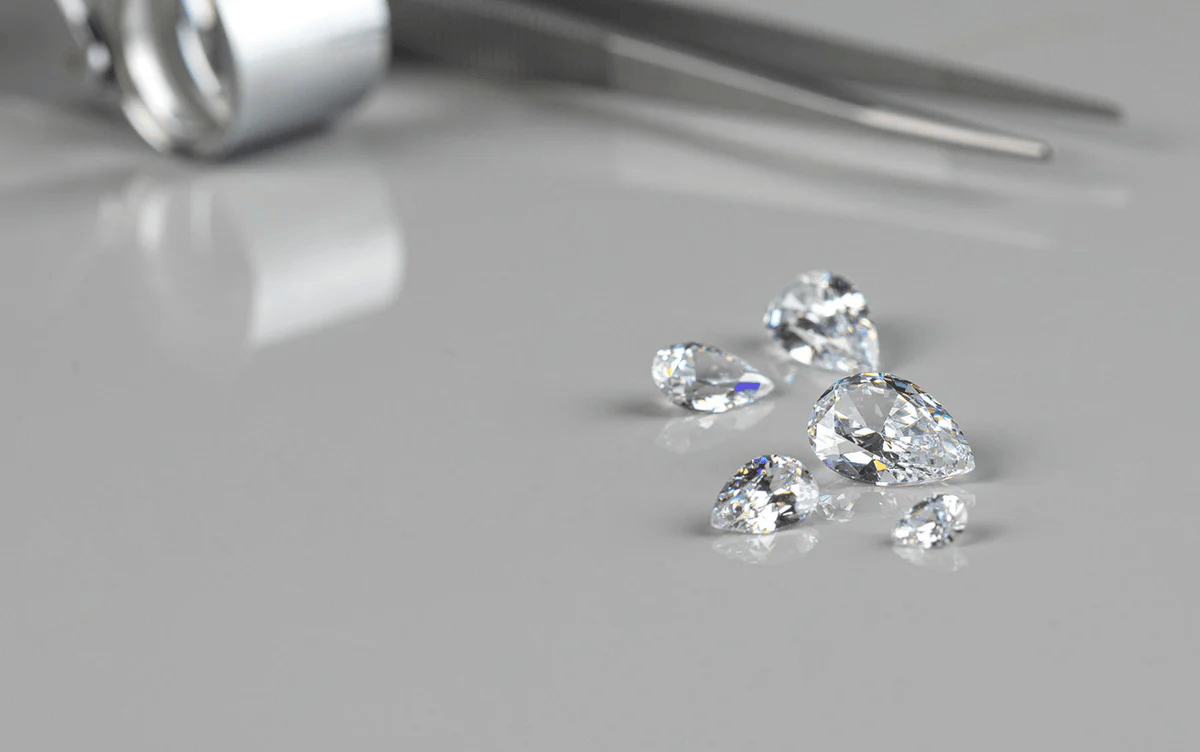
The answer is yes. Unambiguously, scientifically, categorically yes. But the more interesting question — the one nobody is quite asking — is what real even means when it comes to a diamond. Because once you understand that, everything changes.
A diamond is not defined by where it was born. It is defined by what it is: pure carbon atoms arranged in a specific crystal lattice, bonded with extraordinary force, forming the hardest natural substance on earth. That structure — that precise, repeating geometry of atoms — is what makes a diamond a diamond. Not a mine. Not a mountain. Not a century of geological pressure. The structure.
A lab-grown diamond has that exact same structure. The same carbon. The same lattice. The same hardness, the same refractive index, the same fire and brilliance when light passes through it. Place a lab-grown diamond next to a mined diamond of equivalent cut and quality, and no human eye — not even a trained gemologist’s eye — can tell them apart. The instruments required to distinguish them are the same infrared spectrometers used in research laboratories. That is not a marketing claim. That is physics.
So why does the doubt persist?
Part of it is language. Words like synthetic and man-made carry connotations of imitation, of something lesser. We associate synthetic with plastic, with substitute, with the thing you buy when you cannot afford the real one. But synthetic, in its precise scientific meaning, simply means created through synthesis — a process, not a judgment. Water synthesized in a laboratory is still water. A diamond grown in a laboratory is still a diamond.
Part of it is also the story the diamond industry has told for generations — that a diamond’s value lives in its rarity, its ancient origins, its journey from deep within the earth. That story is powerful. It is also, in important ways, incomplete.
Here is something most people do not know: the rarest, most chemically pure diamonds in the world — the ones that appear in royal collections, that sell at auction for hundreds of thousands of dollars per carat, that gemologists may never encounter in an entire career — belong to a classification called Type IIa. These diamonds contain no measurable nitrogen or boron impurities in their crystal structure. They represent less than two percent of all diamonds ever mined. They are the standard against which diamond purity is measured.
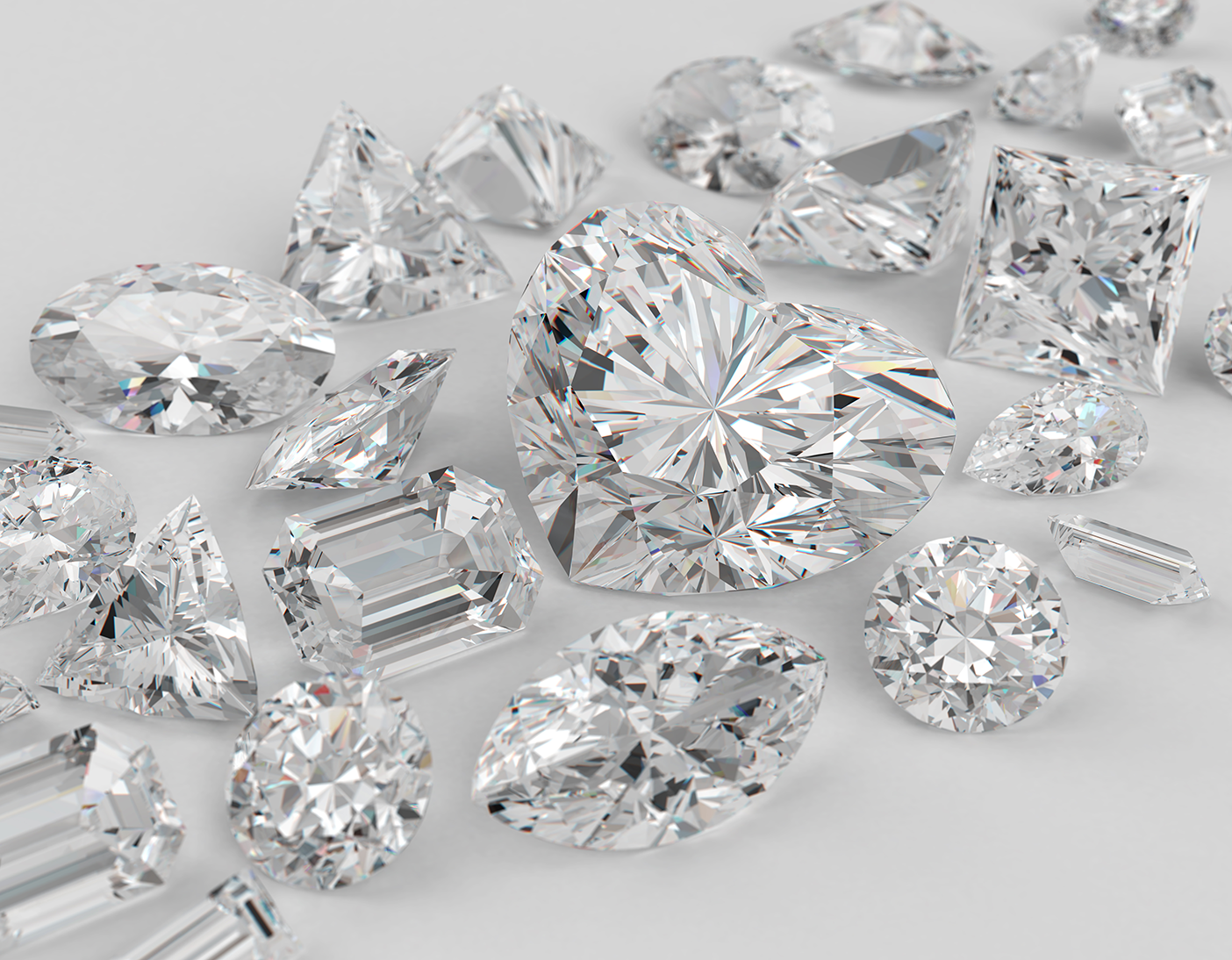
And lab-grown diamonds are frequently produced at that same level of purity.
Let that settle for a moment. The kind of chemical perfection that took the earth billions of years to produce in vanishingly rare quantities — the kind associated with legendary stones and impossible budgets — is now the baseline for what a well-made lab-grown diamond can be. Not an approximation of it. Not a simulant of it. The actual thing, verified by the same gemological laboratories, graded by the same standards, certified by the same institutions.
This is not a story about compromise. It is a story about access.
For a long time, the conversation around lab-grown diamonds has been framed as a trade-off: you get a lower price, but you give something up. What you supposedly give up shifts depending on who is talking — sometimes it is resale value, sometimes it is romance, sometimes it is the vague but persistent sense that it is not quite the same thing. But when you look at the science, when you sit with what a diamond actually is and what lab-grown actually means, the trade-off framing starts to dissolve.
What you are really choosing, when you choose a lab-grown diamond, is a stone with the same physical and optical properties as a mined diamond — and often with a level of chemical purity that exceeds the vast majority of stones pulled from the earth. You are choosing a diamond that was made with intention, in a controlled environment, graded by the same rigorous standards. You are choosing something that is, by every scientific measure, real.
The question was never really about the diamond. It was about permission — permission to want something beautiful without the weight of doubt attached to it. Permission to make a choice that reflects your values without feeling like you have settled for less.
You have not settled. You have simply looked at the evidence and made a clear-eyed decision. That is not a compromise. That is confidence.
And confidence, it turns out, looks a great deal like a diamond.
Frequently Asked Questions
Are lab-grown diamonds real diamonds?
Yes. Lab-grown diamonds are composed of the same pure carbon crystal structure as mined diamonds, with identical hardness, refractive index, and optical properties. They are real diamonds by every scientific and gemological definition.
Can you tell the difference between a lab-grown diamond and a mined diamond?
No human eye — including a trained gemologist’s — can distinguish a lab-grown diamond from a mined diamond. Only advanced infrared spectrometers used in laboratory settings can identify the difference, and that difference is one of origin, not composition.
What does ‘synthetic’ mean when applied to diamonds?
In scientific terms, synthetic simply means created through a synthesis process — it is a description of method, not quality. A synthetic diamond is still a diamond, just as water produced in a laboratory is still water.
What is a Type IIa diamond and why does it matter?
Type IIa diamonds contain no measurable nitrogen or boron impurities, making them the most chemically pure diamonds known — less than two percent of all mined diamonds qualify. Lab-grown diamonds are frequently produced at this same purity level as a standard outcome of the growth process.
Is choosing a lab-grown diamond a compromise?
No. A lab-grown diamond offers the same physical and optical properties as a mined diamond, often at a higher level of chemical purity and a significantly lower price. It is a clear-eyed, evidence-based choice — not a trade-off.


